Beyond the Rule of Three: Why the 3-5-7 Method is the Real Designer Secret
This article may contain affiliate links.
The 3-5-7 Method in 30 Seconds:
This design rule expands the "Rule of Three" by scaling odd-numbered decor groupings to match the surface's visual weight. For example, 3 for small side tables, 5 for coffee tables, and 7 for large consoles. To master it, always vary the heights of your objects to create a triangle silhouette, mix textures, and stick to a color palette, ensuring the space feels curated rather than cluttered.
You’ve probably heard of the Rule of Three. It’s a design technique that uses groupings of threes to create a look that's balanced, relaxed, and visually interesting. It’s usually the first trick that pops up when you google “How to style a shelf”. And while three works, sometimes a surface requires a bit more visual weight.
The Rule of Three is just one tool in the home styling toolbox. Expanding to odd groupings of five and seven will give you more options when styling tables, long shelves, or consoles.
Why Styling With Odd Numbers Works
The human brain loves odd numbers because they force the eye to move around, creating visual interest. The human brain also loves a pattern. While one large piece works very well to fulfill that love of odd numbers (and you should absolutely use that trick), three is the smallest number required to create a pattern, which hits the design psychology sweet spot.
However, when scale and proportion require more balance and visual weight, styling with 5 or 7 items will be the way to go. For instance, a side table may need 3 items, but a console will look unfinished with only 3, and 5 may be the best option.
The 3-5-7 Styling Method
The 3-5-7 method is about balance, and filling visual space without overcrowding. We want our vignettes to look curated and beautiful, not like a cluttered hodgepodge of random things.
Breaking Down the Styling Formulas
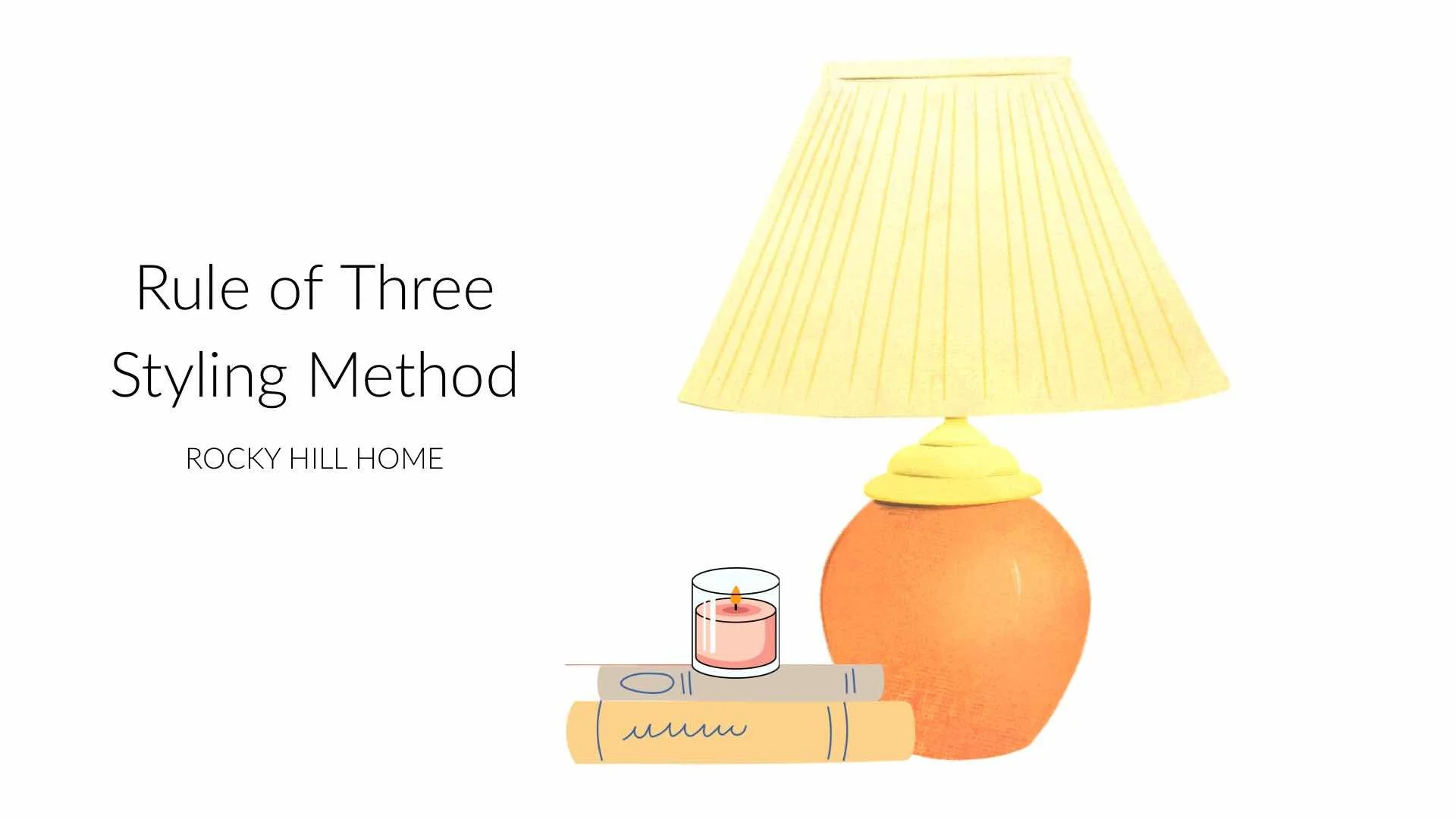
1. The Power of 3: The Small Vignette
Best for: Nightstands, small end tables, or you can use this styling trick multiples times on the same shelf as long as there is distinct spacing between groupings.
The Vibe: Simple and clean.
The Formula: One tall item (a lamp), one flat item (a short stack of books), and one organic item (a small candle or plant).
2. The Power of 5: The Balanced Vignette
Best for: Coffee tables, fireplace mantels, or entryway consoles.
The Vibe: Curated and lived-in.
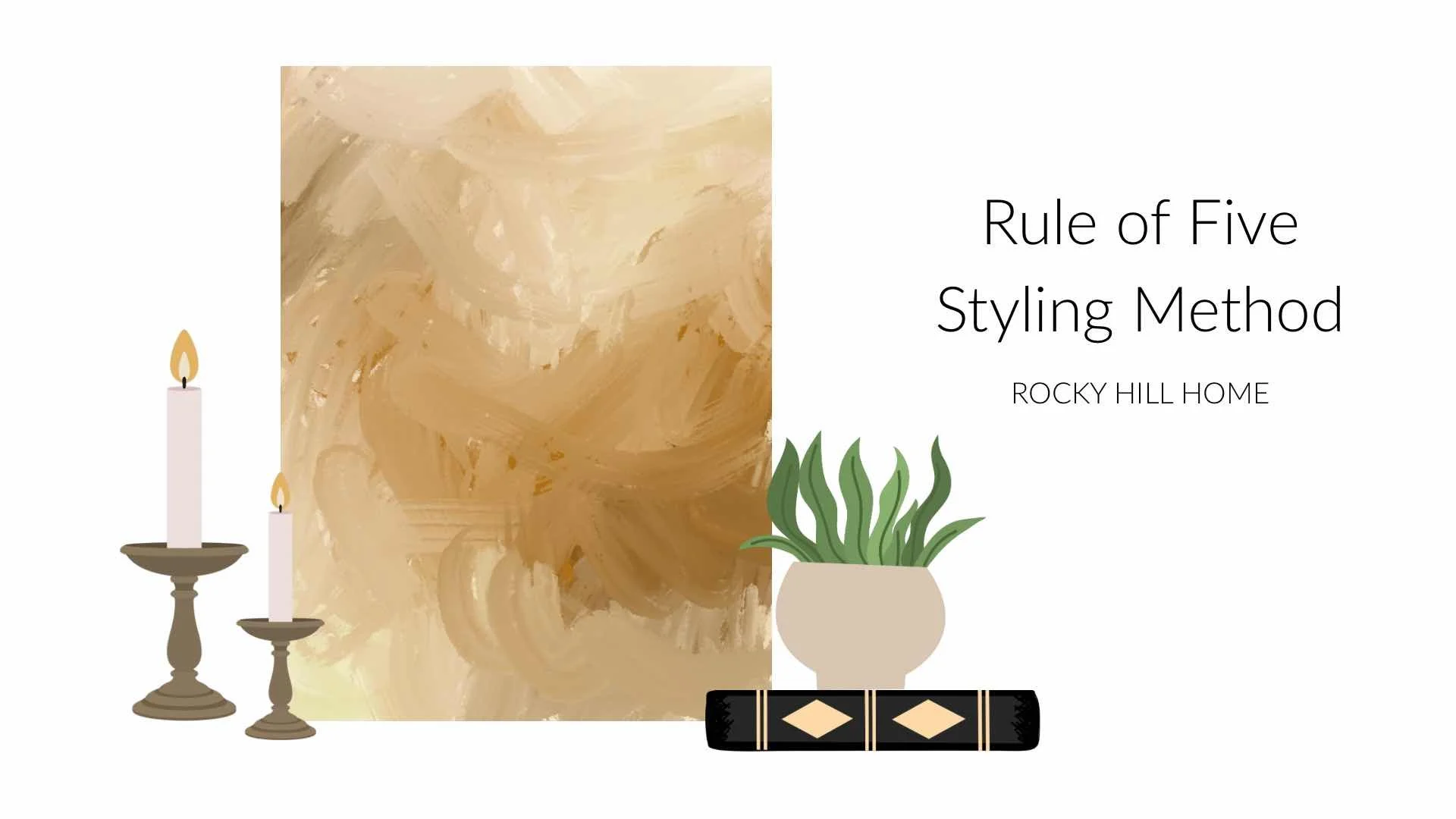
The Formula: Move to five items when you have enough real estate to really layer. Think of it as 3 + 2. You have your primary trio, plus two supporting elements for balance. Here, two candlesticks of differing heights were added to a group of three, balancing the book and plant.
3. The Power of 7: The Grand Statement
Best for: Large dining tables, long sideboards, or deep kitchen islands.
The Vibe: High-end, sophisticated, and editorial.
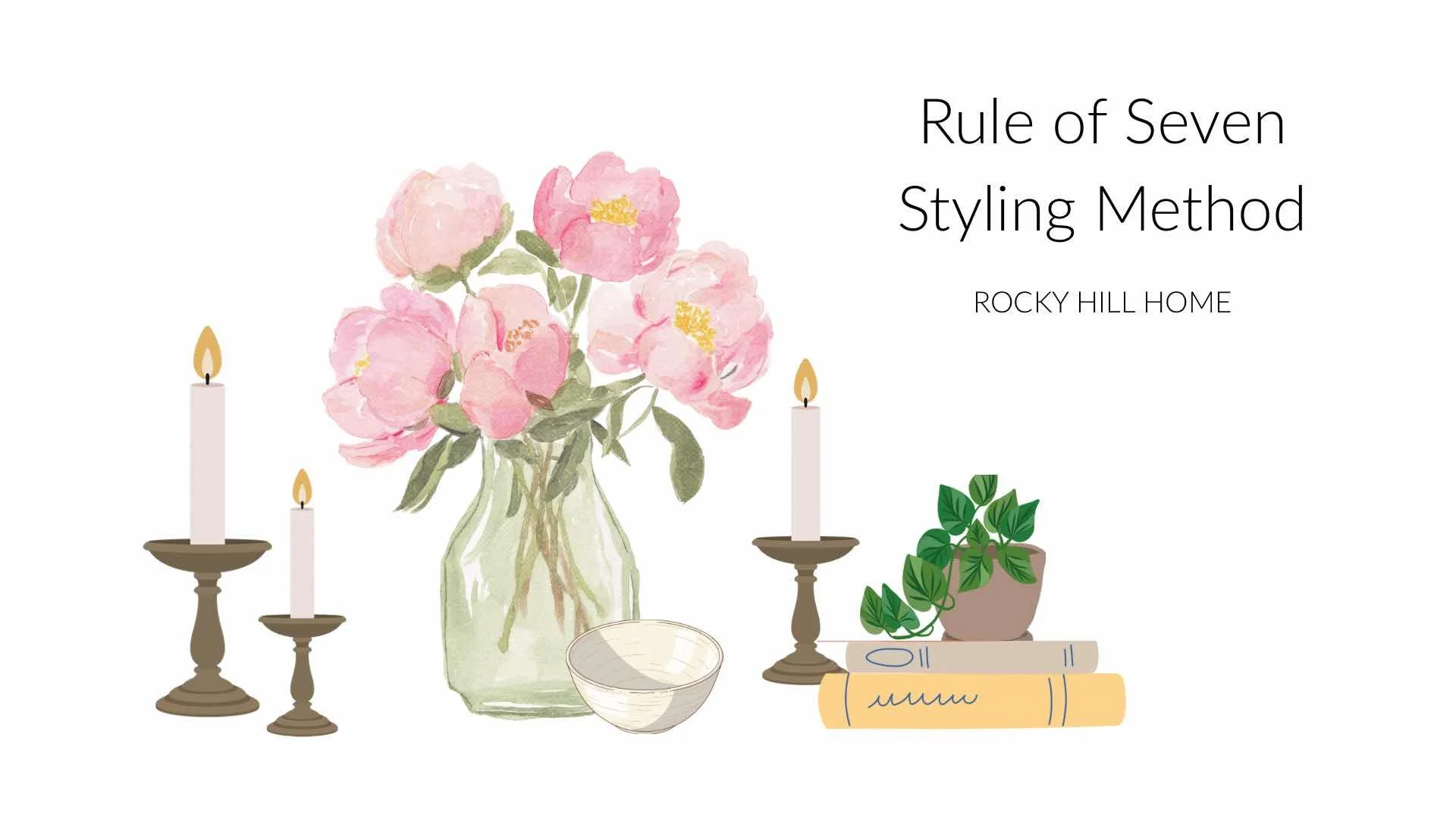
The Formula: Seven items allow you to play with rhythm and further spread out to keep your decor from looking like an island surrounded by a vase ocean. Create multiple height peaks across a long surface so the eye never gets bored.
How to Style Like a Pro: The 3-5-7 Rules
If you just put seven random items in a row, it will look like a garage sale. To make the 3-5-7 method work, follow these design tips:
Vary the Heights
One of the biggest mistakes people make is choosing pieces of the same height. Whether you are using 3, 5, or 7 items, you want your grouping to have a triangle silhouette. Notice in the examples above, you could draw a triangle over each vignette.
High: A tall vase, lamp or framed artwork.
Medium: Candlesticks, medium sculpture or vase
Low: A tray, bowl, books, or a small coaster.
Play with Textures, Stick to a Color Palette
To prevent a group from feeling flat, mix your materials. Your textures might include: Glass (a cloche), wood (a tray or basket), ceramic (a vase), metal (a brass candle holder), paper (stacked books), or stone (a marble bowl). While you want a healthy mix of textures, keeping everything within the same color palette will keep your vignette from looking cluttered.
The Layering Secret
Professional stylists rarely line up a group of objects. They layer them. Start with your focal point (this will be your tallest item) and layer in each piece by slightly overlapping them. Place a candle so that the edge sits slightly in front of a book. Turn the branches of a plant so that they hang over a small box. This visually connects the individual items, creating a unified story.
Final Thoughts
As with any design method or formula, 3-5-7 isn’t set in stone. It’s a guide to help give you a place to start when styling. To try these formulas with items you have in your home, completely clear off the space and add one piece at a time, starting with the tallest item, and working your way to the shortest. Most of all, styling should be fun. If you feel yourself getting frustrated, walk away and try again later. This last part works for me every time!
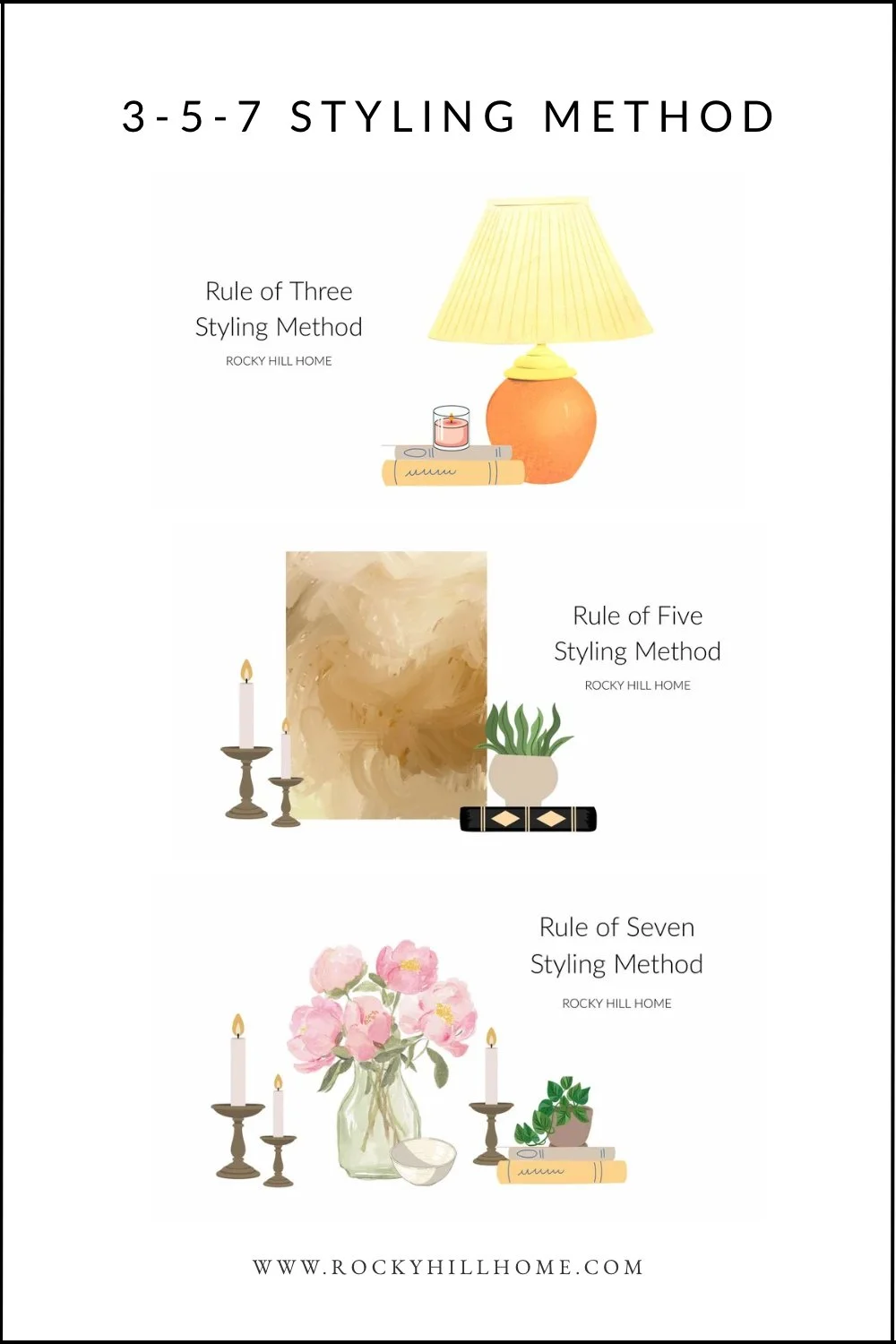
The Cheat Sheat: Pin this guide for effortless home styling
Shop Rocky Hill Home Decor Finds and Mood Boards